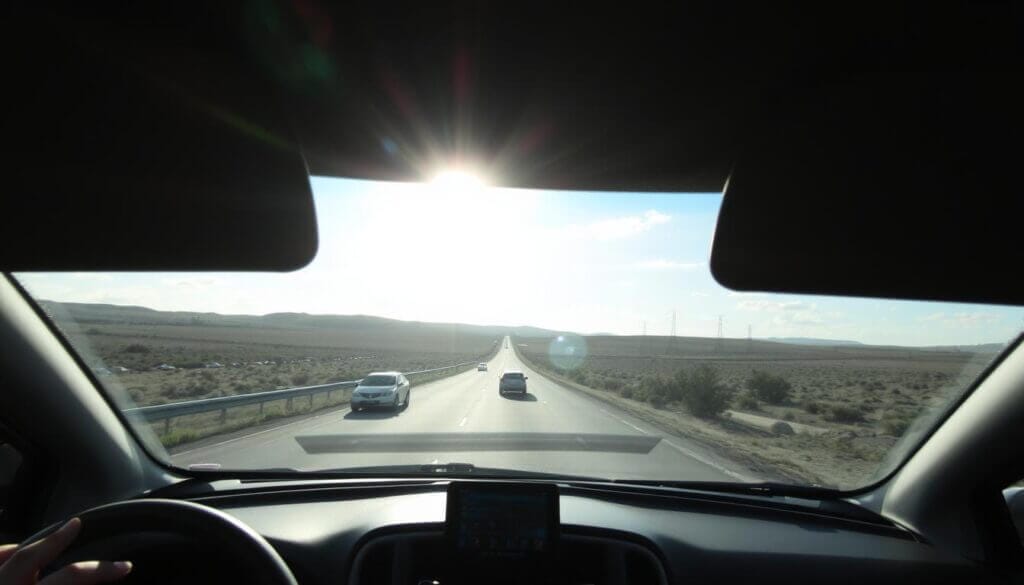
Wide-angle lens dash cameras are getting more popular. They show more of what happens on the road and can help prove who was at fault in accidents.
This can help prove who was at fault in accidents. But there are good and bad points to think about before you buy one. For a comparison of field-of-view performance across top models, see our review of the best wide-angle dash cams for cars.
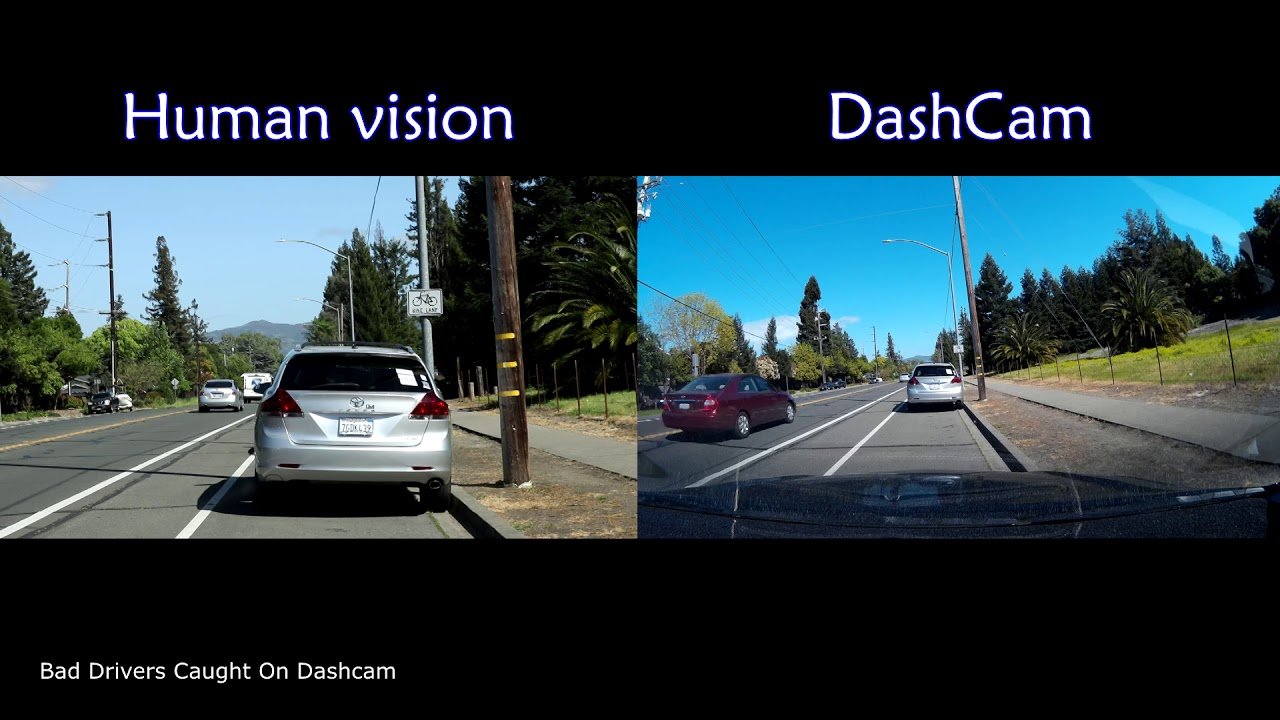
These types of dash cameras can see more of what’s happening, with a 140° to 170° Diagonal Field of View (DFOV). This helps get clear evidence of what happened before an accident by capturing the vehicle’s periphery and adjacent lanes. It can also help prove who was wrong in a crash.
But, there are privacy worries. The camera might record people inside the car. This could lead to legal issues.
Also, setting up and keeping these cameras running can cost a lot, especially for fleet managers.
At a Glance
- Diagonal Field of View (DFOV): Standard 140° (Front) to 170° (Rear); provides 3-lane periphery.
- Pros: Objective evidence, fraud protection, better insurance outcomes
- Cons: Privacy concerns, edge distortion, higher cost, more footage to review
- Primary Goal: Provide wide-angle situational awareness for drivers and fleet managers.
Pros and Cons of Wide-Angle Lens Dash Cameras
Wide-angle lens dash cameras have many benefits and some downsides.
They can provide objective evidence in case of a road incident. This helps prove what really happened, making the footage more believable. It also helps avoid false claims and can lead to better insurance settlements.
But, there are privacy worries with these cameras. They can capture too much, invading personal space. They might also have technical difficulties like poor image quality in the dark. Plus, the footage might not be allowed in court in some places.
These cameras are also pricier and take more time to use. The advanced tech and wide view cost more.
Reviewing all the footage can take a lot of time and effort.
The wide-angle lens captures more, but might lose some detail. Whether to use one depends on what you need and want.
What is a Wide-Angle Lens Dash Camera?
…
Frequently Asked Questions
What is a wide-angle lens dash camera?
A wide-angle lens dash camera records the road with a Diagonal Field of View (DFOV) of about 140° to 170°, capturing more of the scene—including sidewalk activity and multi-lane hazards—than standard dash cams. This can provide stronger evidence and context in the event of an incident.
… (10 Q&As)
Conclusion
Wide-angle lens dash cameras have many benefits for drivers.
They help prove what happened, protect against false claims, and help in settling disputes. They make the road more transparent and accountable.
But they also have some downsides. There are privacy worries and technical problems, and they cost more.
Whether or not to use a wide-angle lens dash cam depends on your needs and local laws. Think about the good and bad points, and look into features and accessories. For a detailed breakdown of how lens angle impacts overall evidence quality, refer to our master dash camera feature guide. This will help you decide if it’s right for your car.
It’s key to know about dash camera tech updates and use them wisely.
This way, wide-angle lens dash cameras can offer great protection and peace of mind.
