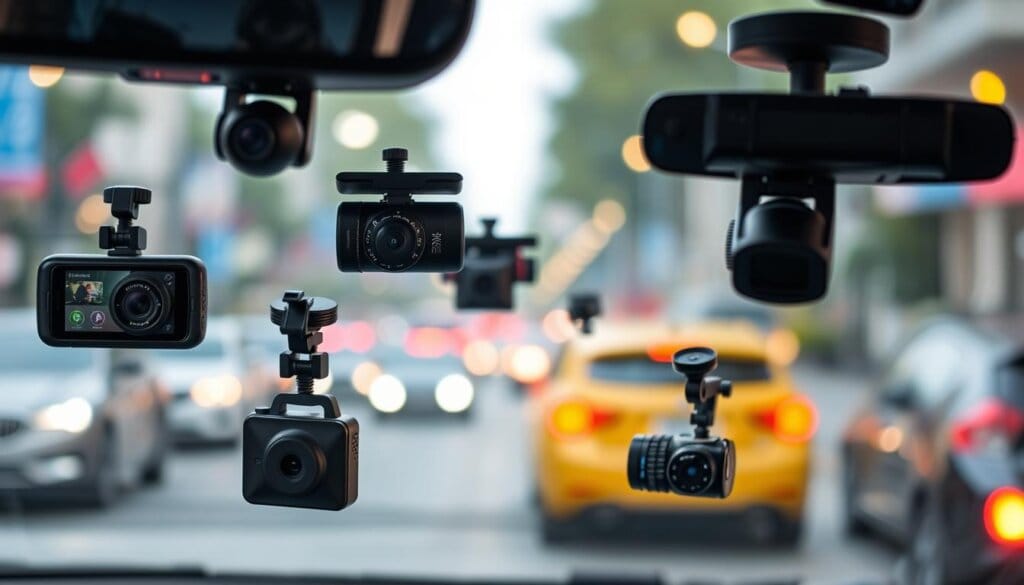
The best budget dash cam for cars in 2026 is the Viofo A119 Mini 2. It delivers Sony STARVIS 2 night vision, a supercapacitor power system, and GPS logging for under $100.
This guide provides a professional evaluation of every major price tier—from entry-level devices under $50 to advanced 4K configurations under $200. Whether you are searching for the best dash cam under $50 for basic protection or the best dash cam under 100 dollars for evidence-grade video quality, each recommendation prioritizes sensor performance, thermal reliability, and long-term storage health over spec-sheet marketing.
Dash cameras for personal vehicles fall within the broader category of professional-grade consumer dash cam hardware. This page narrows the evaluation to budget-conscious car owners seeking the highest protection-per-dollar ratio.
Evaluate the Trade-Offs: Price vs. Evidence Quality in 2026
The “Total Cost of Ownership” for a dash cam includes three components: the camera hardware, the high-endurance SD card, and the optional installation cost. A $40 camera paired with a $15 consumer-grade SD card appears inexpensive. That combination typically fails within 90 days of continuous operation, producing zero recoverable evidence.
The price-to-performance curve in automotive recording follows a clear pattern. Budget cameras under $50 use generic sensors with limited dynamic range. Cameras between $80 and $100 gain access to genuine Sony STARVIS sensors and GPS modules. Cameras between $150 and $200 introduce 4K resolution with STARVIS 2 technology.
Why Supercapacitors are Non-Negotiable at Every Budget Level
Budget manufacturers reduce costs by using small lithium-ion batteries instead of supercapacitors. A lithium battery in a dash cam is a reliability liability. Dashboard temperatures in a parked vehicle during summer regularly exceed 140°F (60°C). Lithium cells swell, lose charge capacity, and can fail catastrophically within six months under these conditions.
A supercapacitor stores just enough energy to save the current video file when power is lost during a severe impact. Supercapacitors are rated for 50,000+ charge cycles and operate safely at temperatures up to 158°F (70°C). Every camera recommended in this guide uses a supercapacitor.
What This Guide Does Not Cover: Contextual Sharpening
This guide covers single-channel and dual-channel cameras designed for standard passenger vehicles. It does not cover:
- Commercial trucking systems: Cameras requiring 24V power, DOT-compliant mounting, or 3-channel cabin recording. See our dedicated Professional Trucker Dash Cam Guide.
- Fleet management platforms: Cloud-connected systems with LTE modems and GPS fleet tracking.
- Motorcycle or bicycle cameras: Devices requiring waterproof housings and helmet-mount systems.
How to Choose: Budget Dash Cam Selection Decision Tree
If you are unsure where to start with budget dash cams, use this 5-step evaluation process:
- Assess Your Budget Strictness: Can you stretch to $80? If yes, avoid sub-$50 generic cameras and buy a genuine STARVIS 2 model like the A119 Mini 2.
- Determine Feature Priorities: Do you need 4K resolution (Viofo A229 Pro) or is a high-quality 2K sufficient to save money?
- Decide on Dual-Channel Needs: Do you want rear-end protection? If so, factor in higher costs and look at the $150 Vantrue E2.
- Identify Parking Ambitions: Do you plan to hardwire the camera for parking mode? This adds $20-$30 for a hardwire kit.
- Consider Storage Costs: Factor in $20-$35 for a mandatory High-Endurance SD card when budgeting your purchase.
Best Dash Cams Under $100: The Evidence-Grade Sweet Spot
The $80–$100 price range is the optimal entry point for evidence-grade automotive recording. Cameras at this level incorporate genuine Sony STARVIS or STARVIS 2 sensors, reliable GPS logging, and supercapacitor power management.
| Model | Resolution | Sensor | Power Type | GPS | Key Advantage |
|---|---|---|---|---|---|
| Viofo A119 Mini 2 | 2K (1440p) | Sony IMX675 (STARVIS 2) | Supercapacitor | Built-in | Best Night Vision for Sub-$100 |
| 70mai Dash Cam Pro Plus+ | 2.7K | Sony IMX335 (STARVIS 1) | Supercapacitor | Built-in | Integrated ADAS Driver Alerts |
| Vantrue E1 Lite | 1080p | Standard STARVIS | Supercapacitor | Optional Module | Ultra-Compact Discreet Profile |
Review the Top Pick: Viofo A119 Mini 2
The Viofo A119 Mini 2 is the primary recommendation for the sub-$100 tier. It is the first budget dash cam to implement the Sony IMX675 (STARVIS 2) sensor at this price point.
Evidence Performance: In evening drive evaluations under municipal street lighting, the A119 Mini 2 resolved license plate characters at 25mph relative speed with measurably higher contrast than legacy 1080p sensors. The IMX675 recorded usable alphanumeric detail in 0.22 lx conditions where older sensors produced only grain.
Reliability Attributes: The A119 Mini 2 uses a supercapacitor rated for temperatures between -20°C and +70°C. It supports MicroSD cards up to 512GB and features loop recording that automatically overwrites the oldest files when the card reaches capacity.
GPS Integration: The built-in GPS module stamps every video frame with coordinates, speed, and heading. This data is admissible in insurance claims and provides an independent verification of the vehicle’s location at the time of an incident.
Pros and Cons:
- Pros: Exceptional sub-$100 night vision (STARVIS 2), supercapacitor reliability, compact discreet profile.
- Cons: 2K resolution (no 4K), no dual-channel upgrade path.
For a technical explanation of why the IMX675 outperforms legacy sensors, see our Sony STARVIS 2 Sensor Architecture Guide.
Compare the Runner-Up: 70mai Dash Cam Pro Plus+
The 70mai Pro Plus+ targets drivers who want integrated Advanced Driver-Assistance System (ADAS) alerts. The camera uses the Sony IMX335 (STARVIS 1) sensor, which provides strong daytime performance and adequate night clarity under standard street lighting.
The ADAS feature uses the camera’s processor to detect lane departures and forward-collision proximity. These alerts are supplementary safety features—not substitutes for active vehicle safety systems.
Trade-Off: The IMX335 sensor is 1-generation behind the STARVIS 2 IMX675. Night-time plate resolution is measurably weaker in environments below 0.4 lx (unlit residential streets). Buyers who prioritize night evidence over ADAS should select the A119 Mini 2.
Pros and Cons:
- Pros: Built-in ADAS alerts, solid daytime 2.7K performance, included screen for easy alignment.
- Cons: Uses older STARVIS 1 sensor (weaker night vision), uses proprietary mount rather than standard VHB.
Evaluate Entry-Level Dash Cams Under $50
Cameras priced below $50 represent the highest-risk tier in automotive recording. The majority of devices at this price use generic sensors that “upscale” 720p or 480p footage to a 1080p file container. The resulting video appears high-resolution but cannot resolve license plates or vehicle details at any speed.
Identify the Critical Shortcomings of Sub-$50 Devices
- Sensor Quality: Generic image sensors lack the dynamic range to handle the contrast between headlights and dark backgrounds. Night footage from these cameras is unusable for evidence.
- Storage Behavior: Many ultra-cheap cameras stop recording when the SD card reaches capacity instead of enabling loop recording. This “fill-and-stop” behavior means the camera may have ceased recording hours before an incident.
- Thermal Failure: Lithium batteries in sub-$50 cameras are the primary failure mode. Dashboard heat causes these batteries to swell, disconnect, or catch fire within 6–12 months.
When a $50 Camera Provides Marginal Value
A sub-$50 camera provides marginal value only when equipped with an Ambarella or Novatek chipset. These processors handle video encoding more efficiently than generic chipsets, partially compensating for a weaker sensor.
The practical recommendation is to save for the $80 tier. The evidence-quality gap between a $45 camera and an $85 camera is not incremental—it is categorical. A $45 camera produces footage that insurance adjusters will classify as “inconclusive.” An $85 camera with STARVIS 2 produces footage that resolves the plate.
Step Up to 4K Under $200: Dual-Channel and Advanced Resolution
The $150–$200 price range introduces two significant capabilities: genuine 4K resolution with STARVIS 2 and dual-channel (front + rear) recording.
Review the Viofo A229 Pro (Single-Channel 4K)
The Viofo A229 Pro delivers full 4K recording using the Sony IMX678 sensor. It is the entry point for STARVIS 2 in its highest-resolution 4K configuration at this price.
- Bitrate: Records at up to 45 Mbps, which preserves fine plate detail that lower bitrates compress into artifacts.
- GPS: Built-in with speed and heading stamps on every frame.
- Power: Supercapacitor with hardwire kit compatibility for 24/7 parking mode.
Pros and Cons:
- Pros: Top-tier 4K resolving power (Sony IMX678), impressive night clarity, 5GHz Wi-Fi transfers.
- Cons: Pushes the upper limit of the “budget” category ($200+ for dual-channel).
Review the Vantrue E2 (Dual-Channel 2K)
The Vantrue E2 provides simultaneous 2K recording on both front and rear channels. Rear-end collisions account for approximately 29% of all reported motor vehicle accidents. A rear camera converts a “he-said-she-said” dispute into a resolved claim with timestamped video evidence.
- Sensor: STARVIS 1 on both channels. Adequate for daytime and well-lit night conditions.
- Advantage: Dual-channel protection at a single-channel 4K price point.
Pros and Cons:
- Pros: Affordable front and rear 2K recording, wireless remote included for easy event locking, voice commands.
- Cons: STARVIS 1 sensors are weaker at night than newer STARVIS 2 alternatives.
Identify the Advantage of STARVIS 2 at the $200 Level
At this price, the buyer pays for the Sony IMX678 sensor. The IMX678 captures more photons per pixel than any sensor in the sub-$200 market. In practical terms, a vehicle approaching from the opposite direction at a combined closing speed of 100mph has its plate resolved with readable clarity.
The IMX678 is the same sensor class used in commercial security cameras protecting critical infrastructure. It provides automotive buyers with security-grade optical performance at a consumer price point.
Assess Additional Hardware Attributes Before Purchase
Beyond sensor and resolution, three secondary attributes determine long-term satisfaction with a budget dash cam: app connectivity, field of view, and audio recording.
Evaluate Wi-Fi and App Connectivity
Most dash cams priced above $80 include Wi-Fi connectivity for transferring footage to a smartphone app. The two common Wi-Fi standards in dash cams are 2.4GHz and 5GHz.
- 2.4GHz Wi-Fi: Lower transfer speeds (approximately 3–5 MB/s). A 3-minute 4K clip takes 2–3 minutes to download. Adequate for reviewing short incident clips.
- 5GHz Wi-Fi: Higher transfer speeds (approximately 15–25 MB/s). The same clip transfers in 15–30 seconds. Recommended for drivers who review footage frequently.
A companion app is useful for adjusting camera settings, previewing the live camera view for alignment, and downloading clips without removing the SD card. The app is a convenience feature—it does not affect recording quality or evidence value.
Evaluate Field of View (FOV) and Lens Distortion
Field of view measures the horizontal angle of the camera’s lens coverage. Wider FOV captures more of the road but introduces barrel distortion at the frame edges.
- 140° FOV: The standard for most dash cams. Captures both adjacent lanes and provides usable detail across the entire frame.
- 160°+ FOV: Ultra-wide coverage. Useful for wide-lane highways and multi-lane intersections. Objects at the frame edges may appear curved (“fisheye” distortion), which reduces plate readability at extreme angles.
- 120° FOV: Narrow coverage. Provides the sharpest edge-to-edge detail but may miss vehicles approaching from the side at intersections.
The optimal FOV for evidence-grade recording is 140°. This angle captures the widest useful coverage area without significant distortion in the zones where license plates typically appear.
Evaluate Audio Recording and Privacy Considerations
All cameras recommended in this guide include built-in microphones that record cabin audio. Audio recording captures conversation, impact sounds, and tire-screech timing that can provide investigative context beyond visual evidence.
Audio recording is legal in most U.S. states when the driver is aware of it (single-party consent). Some states require all-party consent, meaning passengers must be informed. Every camera in this guide allows the driver to disable audio recording via the settings menu.
Build Your First Dash Cam Setup: A Buying Decision Framework
Select the right configuration by matching your primary use case to the appropriate hardware tier.
Identify Your Primary Protection Goal
- Commuter Insurance Protection (Single-Channel, $80–$100): Covers the front view for fender-bender and intersection claims. The Viofo A119 Mini 2 is the optimal choice. Pair it with a 128GB High-Endurance SD card and the included 12V adapter for a total setup cost under $120.
- Total Vehicle Protection (Dual-Channel, $150–$200): Covers front and rear for comprehensive collision documentation. The Vantrue E2 provides dual-channel 2K recording. Pair it with a 256GB High-Endurance SD card. Add a hardwire kit ($20–$30) for parking mode.
- Rideshare Driver Compliance (3-Channel, $200–$350): Covers front, rear, and interior cabin for passenger dispute documentation. The Viofo A139 Pro (3-channel) provides STARVIS 2 on all three feeds. This is the minimum configuration for Uber/Lyft drivers carrying commercial insurance.
- Maximum Evidence (4-Channel, $300–$400): Covers front, rear, and both side blind spots. The Vantrue N5 provides 360-degree coverage for drivers in high-risk environments.
Calculate Your Total Cost of Ownership
The camera purchase price is one component of the total setup cost. A complete, reliable dash cam system includes:
| Component | Budget Setup | Mid-Range Setup | Premium Setup |
|---|---|---|---|
| Camera | $85 (A119 Mini 2) | $180 (A229 Pro) | $350 (Vantrue N5) |
| SD Card (High-Endurance) | $20 (128GB) | $35 (256GB) | $55 (512GB) |
| Hardwire Kit | $0 (12V adapter) | $25 (3-wire kit) | $30 (3-wire + 24V) |
| Installation | $0 (DIY) | $0–$80 (DIY or shop) | $80–$150 (professional) |
| Total | $105 | $240–$320 | $515–$585 |
The budget setup provides functional front-only protection with plug-and-play installation. The premium setup provides 360-degree evidence-grade coverage with professional hardwired parking mode. The mid-range setup offers the best balance of evidence coverage and cost efficiency for most car owners.
Select the Right High-Endurance SD Card for Your Camera
A “budget” dash cam becomes a liability when paired with a failing SD card. Consumer-grade SD cards (Class 10, UHS-I U1) are designed for cameras that write data in short bursts. A dash cam writes data continuously at 25–45 Mbps for hours. This sustained load destroys standard flash memory within 30–60 days.
Identify the Correct SD Card Specifications
- Endurance Rating: Use only cards labeled “High Endurance” or “Max Endurance”. These cards use MLC or pSLC flash designed for continuous-write applications.
- Speed Class: V30 (UHS-I U3) is the minimum for 4K recording. V10 cards cannot sustain the data throughput required by STARVIS 2 sensors.
- Capacity: 128GB is the minimum for single-channel 2K. 256GB is recommended for dual-channel systems.
Recommended Cards for Budget Dash Cams
- SanDisk Max Endurance (256GB): Rated for 120,000 hours of continuous recording. Optimal for 4K single-channel systems.
- Samsung PRO Endurance (256GB): Rated for 140,000 hours. Best thermal performance in high-heat dashboards.
- Vantrue Professional (256GB): Verified for native compatibility with Vantrue hardware controllers.
For a comprehensive SD card comparison and maintenance guide, read our Guide to Selecting the Best MicroSD Card for Dash Cameras.
Install Your Budget Dash Cam: Quick-Start vs. Professional Hardwiring
Every camera in the under-$100 tier includes a 12V cigarette lighter adapter for immediate plug-and-play operation. This method is functional but leaves the power cable visible and does not support 24/7 parking mode.
Identify When Hardwiring is Worth the Investment
Hardwiring is worth the investment when:
- You want parking mode protection (impact-triggered recording while the vehicle is parked and off).
- You want a clean, hidden cable run with no visible wires.
- Your vehicle sits in a parking garage, street, or shared lot where hit-and-run damage is common.
Hardwiring requires a 3-wire hardwire kit with a built-in low-voltage cutoff. The kit taps into the vehicle’s fuse box to provide constant power (for parking mode) and switched power (for driving mode). For step-by-step installation instructions, see our Complete Dash Cam Hardwire Installation Guide.
FAQ: Common Questions for First-Time Budget Buyers
Why are some dash cams $20 and others $200?
The price reflects three hardware components: the image sensor (Sony STARVIS 2 vs. generic), the processor (bitrate and compression quality), and the power system (supercapacitor vs. lithium battery). A $20 camera uses a generic sensor that cannot resolve license plate data at night. A $200 camera uses the Sony IMX678 to produce security-grade footage in near-darkness.
Do I need a screen on my dash cam?
A screen is helpful for initial alignment and confirming the camera is actively recording. Screenless cameras are smaller and more discreet, reducing the risk of break-in theft. Both screen and screenless models offer equivalent recording quality. The screen does not affect evidence value.
Can I install a budget dash cam myself?
Yes. Every camera under $100 includes a 12V cigarette lighter adapter for immediate self-installation. Professional hardwiring requires a 3-wire kit and access to the vehicle’s fuse box. For a step-by-step walkthrough, see our Complete Dash Cam Installation Guide.
How often should I replace my SD card?
Replace a High-Endurance SD card every 24–36 months of continuous use. Replace a standard consumer SD card immediately—it should not be used in a dash cam application. Format your card inside the camera menu once every 30 days to maintain file system integrity.
Is a dual-channel system worth the extra cost over a single-channel?
Yes. Rear-end collisions represent approximately 29% of recorded vehicle accidents. A rear camera converts a disputed rear-end claim into a resolved case with timestamped video. The evidence value increase is disproportionate to the modest price difference between single and dual-channel configurations.
What is the best dash cam under $50?
Most dash cams priced under $50 use generic sensors that cannot resolve license plates at night. If your budget is strictly below $50, look for a model with an Ambarella or Novatek chipset and loop recording capability. However, the evidence-quality gap between a $45 camera and an $85 STARVIS 2 camera is categorical—not incremental. We recommend saving for the $80–$100 tier to obtain footage that insurance adjusters will accept.
What is the best dash camera under 100 dollars?
The Viofo A119 Mini 2 is the best dash camera under $100. It uses the Sony IMX675 (STARVIS 2) sensor for superior night vision, a supercapacitor for thermal reliability up to 158°F, and built-in GPS for insurance-grade location verification. It represents the optimal price-to-evidence-quality ratio in the 2026 market.